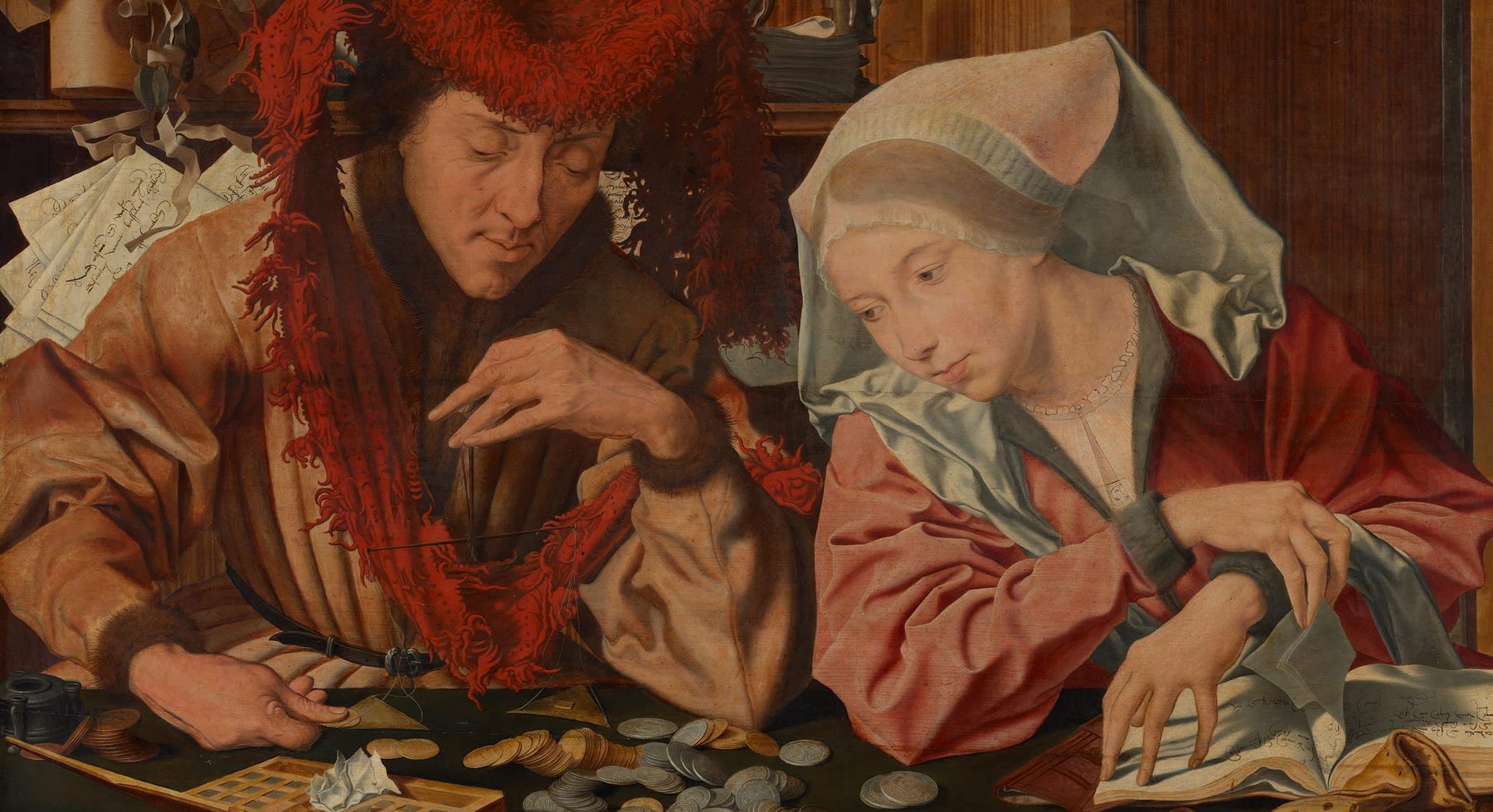
Marinus van Reymerswaele, A Moneychanger and His Wife, c. 1539. Alte Pinakothek, Munich. Public domain, viaWikimedia Commons.
Everything you need for this module lives here: the syllabus, what is expected of you, the material for each session, the project subjects, and how the defences work. It is updated as the module runs, so check back rather than relying on a copy.
The module
SyllabusWhat this module is, what it is not, and how it is run.
PrerequisitesWhat to know, what to install, and what to sign up for before Day 1.
ScheduleWhat happens, in what order, and roughly how far apart. The dates themselves are on the intranet.
GlossaryEvery term the module uses, in one place, in one or two sentences each.
ResourcesThe documentation, references, and reading the module relies on.
Sessions
Day 1: The machine, and your first contractSeminar, on site. What a blockchain is to a developer; a wallet, a node, a transaction; then Solidity, Hardhat, and a deployed contract by five o'clock.
Day 3: The ecosystem, and the adversaryRemote lesson. The map of the Ethereum world, layers, tokens, DeFi, oracles, wallets, storage, and then security, which is the discipline of writing code that money will attack.
Day 4: Building it properly, and the world beyondRemote lesson. The architecture and engineering of a dApp, on-chain and off-chain, testing that tries to break things, deployment and CI, then account abstraction, zero-knowledge, the real-world uses, the jobs, and the final defence.
Practicals, starters and solutionsThe code each practical starts from, the demo code, and the reference solutions once a session has run.
The project
The projectGroups of three, one decentralised application, six weeks.